Peak Age of Female Attractiveness: What the Research Actually Shows
Culture has a confident answer to the question of peak age of female attractiveness: somewhere in the mid-to-late 20s, and downhill from there. Research tells a more complicated story. Large-scale behavioral data, peer-reviewed mate preference studies, and evolutionary psychology literature all point in different directions - and none of them fully agree.
In April 2026, with attitudes toward aging and desirability shifting faster than at any point in recent memory, the question deserves an honest, evidence-first look rather than another recycled ranking.
Why This Question Keeps Coming Up
Dating apps like Tinder and Hinge have made age filters a standard feature, giving numbers more visible weight than before. Hollywood still casts women in their 20s opposite male leads a decade older. Beauty advertising has historically targeted women under 35 as its primary audience.
All of this keeps the question of dating and age circulating. Millennial women who grew up with one set of beauty standards are watching Gen Z rewrite them in real time. That friction is real, and it deserves a straight answer grounded in data.
What Studies Actually Say About Female Attractiveness by Age
Attractiveness research produces findings that are easy to misread. A 2021 study published in PLoS One (Whyte, Brooks, Chan, and Torgler) surveyed 7,325 Australian adults aged 18-65 on mate preferences across aesthetics, resources, and personality. The sample skewed male - roughly 1.7 to 1 - which peer reviewers flagged as a notable limitation.
A synthesis by WomanlyZine.com drawing on multiple studies indicates that perceived attractiveness clusters around ages 28-32. That range reflects an average across aggregated data, not a universal cutoff. The QUT study relied on self-reported importance ratings, not observed behavior - a distinction that matters when interpreting conclusions about real-world attraction.
Stated Preferences vs. Actual Dating Behavior
What people say they want and who they actually pursue are consistently different things. Men in surveys report preferring younger partners, yet behavioral data from online platforms shows actual matches clustering within a few years of the rater's own age.
Self-reported preferences reflect cultural ideals. Observed behavior reflects practical reality.
The 'Golden Period' Claim: Ages 28-32 Under the Microscope
A number of studies converge on the late 20s to early 30s as a so-called golden period. WomanlyZine.com's synthesis identifies ages 28-32 as the window where perceived attractiveness tends to peak - a blend of physical markers, confidence, and life experience rather than a single biological switch.
What this finding cannot prove is that every woman peaks then. Most research drawing this conclusion relies on WEIRD samples - Western, Educated, Industrialized, Rich, and Democratic populations. Effect size - a measure of how meaningful a statistical difference actually is - is frequently modest. Variation within any age group is larger than variation between age groups.
How Sample Bias Shapes These Findings
Most attractiveness studies recruit through online surveys or university pools - groups that skew younger, more educated, and more digitally active than the general population. The QUT 2021 study acknowledged self-selection bias as a core limitation.
Trivers (1972) proposed parental investment theory - the idea that because women invest more biologically in reproduction, they prioritize partner quality differently than men do. Buss (2016) extended this across 37 cultures. Key predictions from these models, including the good genes hypothesis, have shown weak replication in subsequent research, including Cai et al. (2019).
Cultural Construction vs. Biological Signal: Two Competing Frameworks
What Actually Drives Perceived Attractiveness Across Age Groups

Rather than when, the more useful question is what. Research consistently identifies factors that drive perceived attractiveness independently of age:
- Health markers: Clear skin, good posture, and physical vitality signal wellbeing regardless of birth year.
- Grooming consistency: Perceived age can differ from chronological age based on sustained habits.
- Physical energy: How a person carries themselves registers as attractive across age groups in observational research.
- Emotional confidence: Self-assurance is consistently rated as attractive in mate preference surveys, and it tends to increase with age.
- Social presence: Warmth, directness, and engagement are rated highly in both short-term and long-term contexts.
None of these factors expire at a specific age. Think about the last time you felt most confident - was age part of that equation?
Confidence and Self-Perception: What the Numbers Show
Research on women's confidence and aging consistently shows that self-assurance builds through the 30s and 40s - a trajectory that directly complicates simple age-decline narratives. The QUT 2021 study found that emotional connection remained stable or slightly increased in importance across age for both sexes.
Women who report higher self-perception also tend to present in ways others rate as more attractive. This is not a feel-good footnote. It is part of the data. Attractiveness blends physical, psychological, and social signals - and the psychological component strengthens over time.
Media Representation and the Attractiveness Narrative
For decades, Hollywood casting maintained a reliable age asymmetry: male leads aged while female counterparts cycled younger. Advertising similarly targeted women under 35 for beauty products, reinforcing the idea that desirability followed a steep downward curve after early adulthood.
That picture is shifting in the mid-2020s. Women over 40 are increasingly visible in prestige television and fashion campaigns. The beauty industry has expanded toward older demographics - partly commercial, partly in response to genuine cultural pressure. These shifts do not erase decades of narrow representation, but the narrative around age and perceived appeal is more contested now than at any recent point.
Dating Apps and Age: What the Data Reveals
A large study of nearly 200,000 online dating users found that users regularly attempt to match with partners roughly 25% more attractive than themselves - meaning aspirational matching, not just age, drives behavior on platforms like Tinder and Hinge. Profile quality, response style, and bio content carry significant weight alongside age.
Men in their 40s may set wide age preferences, but actual matches tend to cluster within a few years of their own age, driven by availability and mutual interest rather than stated ideals.
Evolutionary Psychology Explanations: Useful, But Incomplete
Evolutionary psychology offers a coherent framework for why age-related preferences exist. Trivers (1972) argued that because women bear higher biological costs in reproduction, they evolved to prioritize partner quality.
Men, facing lower obligate investment per mating event, evolved stronger preferences for physical cues signaling fertility. The QUT 2021 study confirmed that male respondents rated physical attractiveness significantly higher than females did across all age groups.
Thomas et al. (2019) found this prioritization replicated across the UK, Norway, Australia, Singapore, and Malaysia. What evolutionary models cannot explain includes individual variation, same-sex attraction, and why stated preferences routinely diverge from observed behavior. The framework describes tendencies, not fixed outcomes.
Where Evolutionary Theory Falls Short
Modern mate choices happen in environments that bear little resemblance to ancestral ones. Peer reviewers of the QUT 2021 study criticized its early drafts for applying male-compete/female-choose logic - a framework better suited to other species.
Hyde (2005) documented that most measurable psychological differences between men and women are small. Studies relying on WEIRD samples cannot reliably generalize globally. Sex differences in mate preference are real but relative, not absolute - a distinction the QUT study's final version acknowledged.
Relationships, Values, and What Lasts Beyond Attraction
Physical attraction gets people in the door. It rarely determines whether they stay. Research synthesized by WomanlyZine.com confirms that lasting partnerships depend more on compatible values, shared goals, and emotional trust than on perceived attractiveness and age.
The QUT 2021 study found preference for trust and openness increased with age for both sexes - what people prioritize evolves in ways that favor deeper compatibility over surface-level appeal.
As relationships develop, the relative weight of physical appearance decreases. Does this match what you've observed in your own relationships?
Self-Care, Lifestyle, and Attractiveness Beyond Your 30s
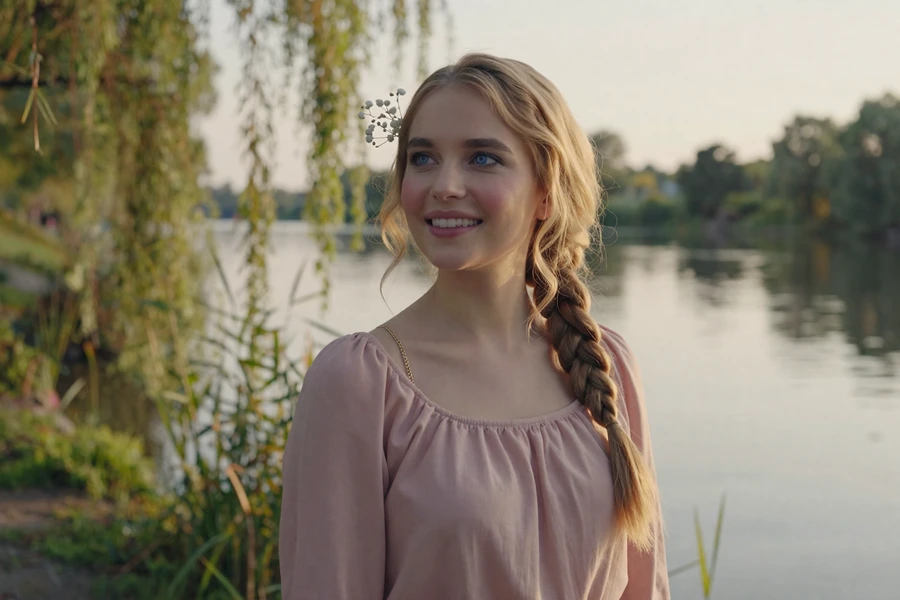
Research shows that consistent self-care allows women to maintain and often enhance perceived attractiveness well into their 40s and beyond. Evidence-backed lifestyle factors include:
- Sleep quality: Inadequate sleep measurably affects skin texture and vitality cues others use to assess health.
- Physical activity: Regular movement affects posture, muscle tone, and fitness markers observers associate with wellbeing.
- Skincare consistency: A sustained routine influences how closely perceived age tracks chronological age.
- Stress management: Chronic stress accelerates visible aging markers and suppresses confident presentation.
- Social connection: Active social networks support the warmth and engagement that research links to desirability.
These are patterns the data reflects - and none of them expire at 32.
Skincare Science and Perceived Age
Dermatological research has established that perceived age can diverge substantially from chronological age based on consistent skincare habits - particularly sun protection and retinoid use. Observers reliably estimate age from facial skin condition, meaning skincare investment directly affects how attractiveness cues are read. Cai et al. (2019) found no reliable connection between facial features and susceptibility to illness, underscoring that appearance and underlying health do not map neatly onto each other.
Cross-Cultural Variation: Attractiveness Isn't Universal
Standards of female attractiveness shift significantly across cultures and historical periods. Body type ideals, age preferences, and the meaning assigned to aging differ in documented ways across societies.
Most large-scale attractiveness studies - including the QUT 2021 survey - draw from Western, English-speaking populations. Peer reviewers flagged this directly, noting that the respondent imbalance and Australian sample base limit how broadly conclusions travel.
Any claim about a universal peak age runs into this problem immediately. What registers as attractive in one cultural context may not register the same way in another, and peak-age narratives flatten variation that the research itself cannot fully resolve.
Generational Shifts: How Millennial and Gen Z Women Are Reframing Attractiveness
Something measurable is shifting in how younger women relate to age-based beauty hierarchies. Gen Z shows greater resistance to the idea that female attractiveness follows a fixed arc. On TikTok and Instagram, natural aging content celebrating women in their 40s and 50s has accumulated large audiences.
Millennial women who came of age with heavily filtered beauty standards are actively interrogating those standards in their 30s.
The QUT 2021 study found that preference for physical attractiveness declined with age for both sexes - suggesting cultural pressure around desirability may be most acute for younger people and ease over time.
The Role of Social Media in Shaping - and Challenging - Standards
Social media operates in two directions simultaneously. Algorithms on image-heavy platforms amplify content that conforms to youth-centric beauty ideals. At the same time, communities built around body neutrality and age-positive representation have grown substantially.
Research on self-perception suggests chronic exposure to idealized images correlates with lower body satisfaction, while exposure to diverse representations has the opposite effect. The net outcome depends heavily on the feeds individual users build.
The Honest Answer: What Age Tells Us and What It Doesn't
Studies suggest perceived attractiveness clusters around ages 28-32 in Western samples - but this is a statistical average drawn from self-reported data with documented limitations, not a biological law. Even the largest sex difference found in the QUT 2021 study - physical build preference - showed an 81% overlap between male and female responses.
Age is one variable among many, interacting with health, confidence, and social context. The more productive question is not when attractiveness peaks but which factors within a person's influence shape how they are perceived by others.
Conclusion: A More Useful Way to Think About Attractiveness and Age
The research does not support a single peak age for female attractiveness - it supports a range of interacting factors, of which age is only one. Health, confidence, self-care, and social presence matter at every stage of life. Those are the variables worth understanding.
Frequently Asked Questions About Female Attractiveness and Age
Is there a single age when women are considered most attractive?
No. Research indicates a general cluster around ages 28-32 in Western samples, but this is a statistical average - not a universal rule. Individual variation within any age group is larger than differences between age groups, and cultural context significantly shapes what is considered attractive.
Do men and women agree on what age range is most attractive?
Partially. Men tend to rate physical attractiveness higher than women do across all ages, according to the QUT 2021 study. Both sexes, however, show declining preference for pure aesthetics as they age, with growing emphasis on trust and emotional connection - suggesting more agreement than the headlines imply.
Does attractiveness actually decline sharply after a certain age?
The data does not support a sharp cliff. The QUT 2021 study found aesthetic preference changes gradually and linearly with age for both sexes. Lifestyle factors - skincare, fitness, confidence - can significantly offset age-related changes in how attractiveness is perceived by others.
How much does personality affect perceived attractiveness compared to physical appearance?
Significantly, especially over time. Trust, openness, and emotional connection are rated as increasingly important with age, per QUT 2021 findings. In long-term relationship contexts, personality factors consistently outweigh initial physical assessments in determining ongoing attraction and relationship satisfaction.
Can women become more attractive as they get older?
Yes. Research synthesis from WomanlyZine.com confirms that self-care, confidence, and healthy habits allow women to maintain and enhance perceived attractiveness beyond their 30s. Confidence - which tends to increase with age - is itself a measurable driver of how others assess attractiveness.
Experience SofiaDate
Find out how we explore the key dimensions of your personality and use those to help you meet people you’ll connect more authentically with.